14th October 2026
10 Warning Signs Your Care Home Needs Turnaround Support

Estimated reading time: 12 minutes
An underperforming care home rarely reaches a crisis overnight. Leadership gaps, inconsistent care, mounting agency costs and unresolved complaints often develop gradually, with each pressure making the next harder to manage.
Recognising care home turnaround warning signs early gives owners, Registered Managers and senior leaders an opportunity to investigate what is changing, protect residents and restore a clear sense of direction.
These ten indicators are not a formal CQC checklist and none automatically means a service is failing. The important questions are whether the pattern is worsening, whether people are safe and whether current management arrangements are producing sustained improvement.
What are the main care home turnaround warning signs?
DIRECT ANSWER
The ten warning signs are management instability; recurring or declining care quality; growing agency staff dependency; falling occupancy; increasing complaints; weak governance; poor staff morale; improvement plans that do not deliver; reactive management; and senior leaders repeatedly drawn into individual problems. When several appear together, a structured review and targeted turnaround support may be needed.
Key Takeaways
- Look for persistent trends and linked problems, not isolated difficult weeks.
- Resident safety, safeguarding and unsafe care require immediate action through the appropriate procedures.
- Combine evidence from care quality, staffing, complaints, occupancy and leadership oversight.
- A useful action plan has named owners, deadlines, evidence of impact and regular review.
- Independent support can help when internal leadership lacks capacity, objectivity or sustained progress.
The 10 warning signs to look for

1. Management instability
Frequent changes in the Registered Manager, repeated leadership vacancies or unclear reporting lines can unsettle a care home even when staff continue working hard. Decisions become inconsistent, improvement activity loses momentum and teams may receive conflicting priorities.
A vacancy does not automatically indicate poor care. The stronger warning sign is an absence of dependable leadership cover, accountability or a credible plan for continuity.
What to check:
- Manager turnover and the duration of leadership vacancies.
- Whether staff know who makes decisions and escalates risks.
- Whether supervision, audits and action plan reviews continued during transitions.
First response: clarify interim accountability, maintain safe leadership coverage and consider interim care management support where continuity cannot be secured internally.
2. Recurring quality concerns or evidence of declining quality
Repeated medicines errors, avoidable care plan gaps, inconsistent risk assessments or concerns about dignity and daily care may show that improvement is not taking hold. The pattern matters more than whether the latest incident has been closed administratively.
Under CQC Regulation 12, providers must deliver safe care and treatment and manage relevant risks. Leaders should investigate whether observed practice, records and outcomes tell a consistent story.
What to check:
- Trends across incidents, medicines, falls, care records and internal audits.
- Whether similar concerns recur across shifts or teams.
- The experience and feedback of residents and their representatives.
First response: act immediately on unsafe practice, assess current risks and review the underlying causes, not only the individual event. See CQC Regulation 12 for the official requirements.
3. Excessive or increasing agency staff dependency
Agency cover is sometimes an appropriate and necessary part of safe staffing. A warning sign emerges when it becomes the default operating model, costs rise without a recovery plan or the home struggles to maintain continuity and familiarity for residents.
CQC Regulation 18 focuses on sufficient numbers of suitably qualified, competent, skilled and experienced staff, alongside appropriate support and development. There is no single agency percentage that automatically establishes a breach.
What to check:
- Agency shifts and spend as a trend, alongside rota gaps and overtime.
- Induction and competency checks for temporary staff.
- Whether staffing and skill mix reflect residents’ changing needs.
First response: establish a safe workforce plan, examine retention and recruitment causes and monitor continuity alongside cost. Refer to CQC Regulation 18.
4. Declining occupancy
A sustained reduction in occupied rooms can weaken financial resilience and limit the capacity to invest in staffing, training or the environment. It may also indicate that families, professionals or local referrers have concerns about the service.
Occupancy alone is not a regulatory quality measure. Referral patterns, local demand, admission decisions and the suitability of available placements all need consideration before assuming that care quality is the cause.
What to check:
- Occupancy trend by month and room type, rather than only a single snapshot.
- Enquiries, visits, conversions and reasons for declined placements.
- Links between occupancy changes, complaints, staffing and local relationships.
First response: protect safe admission decisions, understand lost referrals and connect any commercial recovery plan to quality improvement.
5. Increasing complaints or negative feedback
A rise in complaints, repeated concerns from families or deteriorating feedback may reveal problems that internal audits have not identified. Equally, a higher volume of feedback can reflect a more open speaking up culture, so leaders must assess severity, themes and the quality of responses.
CQC Regulation 16 requires an effective, accessible complaints system and appropriate investigation and action. Repeated complaints about the same issue are particularly important when previous responses have not changed practice.
What to check:
- Complaint themes, recurrence, severity and time to resolution.
- Whether complainants receive clear responses and issues are followed through.
- Whether learning is shared with teams and evidenced in day to day care.
First response: identify patterns, resolve urgent concerns and close the loop with residents and families. See CQC Regulation 16.
6. Weak governance
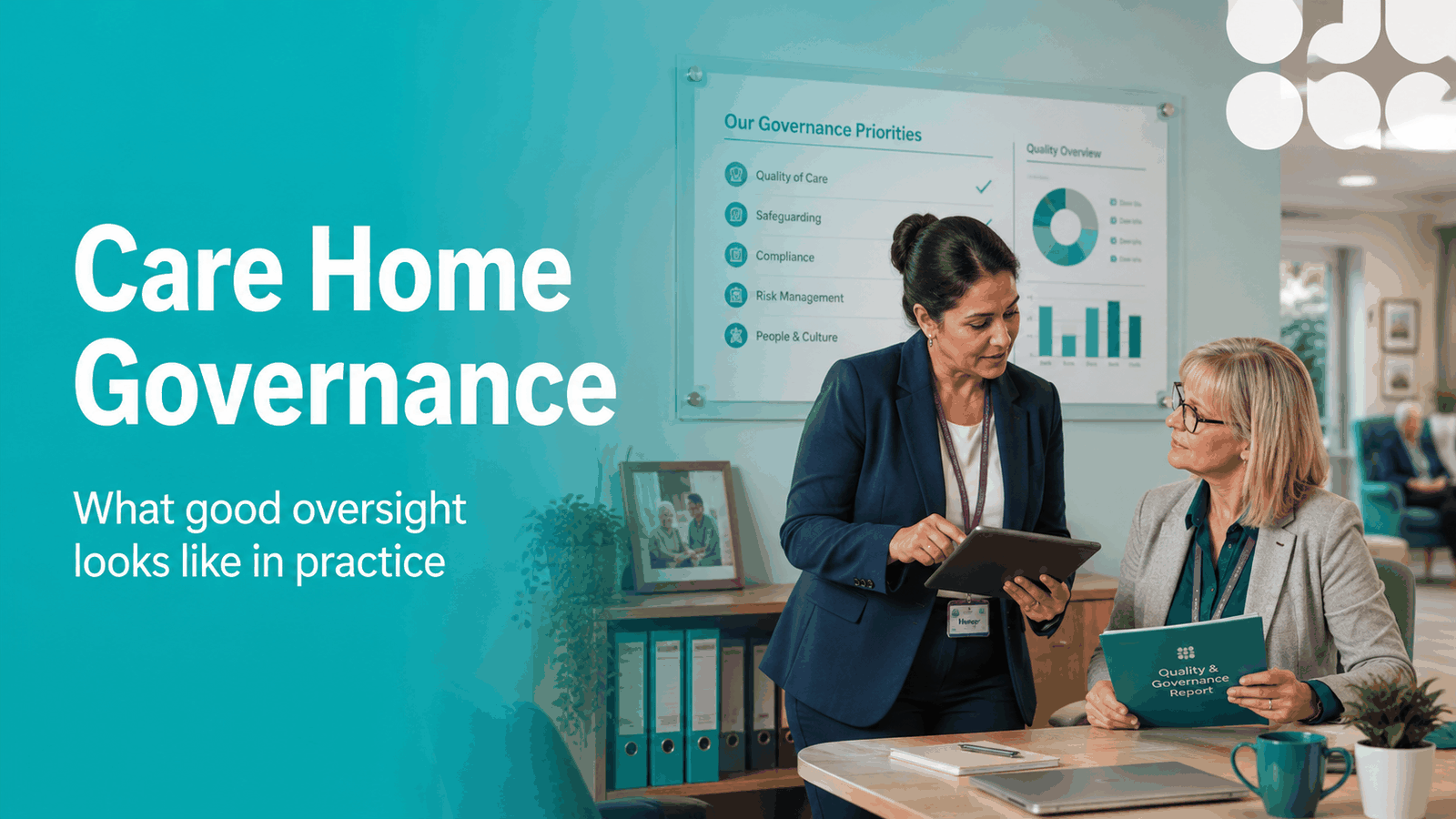
Governance becomes weak when leaders receive information but cannot rely on it to make decisions. Audits may be completed without action, risk registers may be out of date, or board papers may show activity without demonstrating what has improved.
CQC Regulation 17 expects effective systems to assess, monitor and improve quality and safety, manage risk and maintain appropriate records. The test is whether governance works in practice, not how many forms have been completed.
What to check:
- Whether audits result in owned, completed and checked actions.
- The reliability of management information and escalation routes.
- Whether residents’ experiences, safety risks and workforce data reach senior oversight.
First response: rebuild a clear review rhythm and evidence trail. Use CQC Regulation 17 alongside our practical guide to care home governance and oversight.
7. Poor staff morale
High turnover, absence, tension between shifts or a reluctance to raise concerns can weaken the stability of a home. Low morale is often a symptom of unclear priorities, inconsistent supervision, workload pressure or a loss of confidence in leadership.
Not every difficult period indicates a failing culture. What matters is whether staff feel able to speak up, whether leaders listen and whether workforce concerns lead to proportionate changes.
What to check:
- Staff turnover, sickness absence, exit themes and vacancy patterns.
- Evidence from supervision, team meetings and confidential feedback.
- Whether colleagues can raise concerns without fear of adverse treatment.
First response: make it safe to speak openly, listen without defensiveness and act visibly on practical issues the team identifies.
8. Action plans that repeatedly fail to deliver results
An action plan can look comprehensive while doing little to improve care. Repeatedly extended deadlines, unclear ownership and tasks marked complete without checks of effectiveness are signs that the service is managing paperwork rather than change.
The central question is not whether an action was completed, but whether it reduced the underlying risk and has remained effective across different shifts and teams.
What to check:
- Repeat findings from audits, incidents and complaints.
- Overdue actions, changes of ownership and unsupported closure decisions.
- Evidence that new practice is consistently embedded after an action closes.
First response: reduce the plan to clear priorities, assign accountable owners and validate improvement through observation and evidence.
9. Reactive rather than proactive management
If managers spend most of their time responding to incidents, rota gaps and escalations, they may have too little capacity to review emerging trends, coach staff or prepare for foreseeable risks. The service starts moving from one immediate problem to the next.
Reactive work is unavoidable in care. It becomes a turnaround warning sign when there is no protected time for prevention, structured oversight or improvement.
What to check:
- The balance of time spent on unplanned issues compared with planned quality work.
- Whether risks are identified early or only after incidents occur.
- The frequency and reliability of management reviews and forward plans.
First response: introduce a simple operating rhythm for quality, staffing, risk and action review, while protecting the capacity needed for urgent care decisions.
10. Senior management spending increasing time on discrete issues or concerns
When directors or regional managers are repeatedly pulled into individual staffing disputes, complaints, incidents or small operational decisions, normal lines of management may no longer be functioning effectively.
This is different from appropriate senior escalation for serious matters. The warning sign is a recurring reliance on senior intervention for issues that should ordinarily be owned and resolved at service level.
What to check:
- How often the same types of issues are escalated to directors.
- Whether escalation resolves root causes or simply produces a temporary fix.
- The effect on wider oversight, strategy and support for other services.
First response: identify which responsibilities need rebuilding at service level and whether extra operational leadership capacity is required.
Why warning signs become more serious when they overlap
These issues rarely operate in isolation. A prolonged management vacancy can weaken staff confidence. Unsettled teams may increase reliance on agency cover. Changes in continuity can contribute to complaints, while senior leaders become absorbed in resolving repeated problems. If these pressures persist, the home may struggle to deliver lasting improvement.
This sequence is an illustrative risk pattern, not a prediction. A sound assessment should distinguish a temporary challenge from a connected deterioration in quality, governance, workforce stability and performance.
The CQC’s Well led assessment framework describes the importance of effective leadership, learning and governance, including using information about risk and performance to improve care.
What should you do when these signs appear?
Start with a factual assessment, a clear owner and action proportionate to the risks. The following sequence is a practical management approach, not a substitute for any immediate safeguarding, notification or regulatory duties.
Practical first response
- Protect residents first. Where there is suspected abuse, unsafe care or another immediate safety concern, follow the relevant safeguarding and emergency procedures without waiting for a wider turnaround review.
- Create a shared picture. Bring together recent care quality findings, complaints, staffing trends, occupancy, financial pressures and governance actions.
- Identify what is recurring. Separate isolated events from repeated failures, and look for common root causes.
- Assign clear ownership. Set a small number of urgent priorities with named decision makers, realistic dates and evidence of completion.
- Review impact. Check whether practice and outcomes have improved, rather than counting tasks completed.
Where abuse or unsafe treatment is suspected, the CQC safeguarding requirements under Regulation 13 are particularly relevant. Respond through the appropriate formal channels; a consultancy discussion must never delay protective action.
When is independent turnaround support appropriate?
Independent help is worth considering when several signs are worsening, an internal plan is not producing sustained improvement, leadership capacity is limited, or senior stakeholders no longer have enough assurance about the service. A poor inspection outcome can be a trigger, but waiting for one is not necessary.
The level of response should match the problem. Some homes need an objective service evaluation; others need interim management or coordinated turnaround support to stabilise operations while improvement work continues.
| Situation | Likely next step |
|---|---|
| Early indicators with uncertain causes | Independent service evaluation to identify priorities. |
| Management vacancy or weak continuity | Interim leadership and a permanent recruitment plan. |
| Multiple recurring problems and stalled progress | Structured turnaround assessment and implementation support. |
| Immediate safety or safeguarding risk | Protective action and required escalation first, alongside any wider support. |
Delphi’s service evaluations and interim care management offer different levels of help depending on the situation.
What should a practical turnaround plan include?
A credible recovery plan starts with an agreed baseline and prioritises the risks that matter to the people living in the home. It should remain realistic for the staff and leaders who must deliver it.
Core elements
- A diagnosis of root causes across care delivery, leadership, workforce, governance and operational performance.
- Immediate risk controls, with clear safeguarding and escalation responsibilities where relevant.
- A small number of prioritised actions with accountable owners and review dates.
- Evidence of impact, such as repeat audits, practice observation, resident feedback and workforce measures.
- A sustainable management and governance rhythm so improvement continues after the initial intervention.
This reflects the practical approach described in Delphi’s turnaround support for care services: identify the underlying causes, prioritise the most important risks and support implementation rather than producing a report that sits unused.
Frequently asked questions
Does a Requires Improvement rating mean a care home needs turnaround support?
Not automatically. The rating should prompt a careful review of the findings, current risks and the home’s ability to deliver sustained improvement. The need for external support depends on the severity of issues, leadership capacity and evidence of progress.
Is high agency usage enough to indicate a failing care home?
No. Agency staffing can be appropriate when managed safely. Review suitability, continuity, skill mix, induction and whether the home has a credible workforce plan rather than treating a single spending figure as proof of failure.
Can a care home need turnaround support before CQC takes action?
Yes. The purpose of early intervention is to recognise patterns of decline and take proportionate action before they become more entrenched. Providers should not wait for a regulatory intervention to address known safety, quality or governance risks.
What is the difference between a service evaluation and turnaround support?
A service evaluation helps establish what is happening and what needs to change. Turnaround support goes further by helping leaders stabilise operations, structure recovery priorities and implement improvement. The right scope depends on the service’s circumstances.




If you would like to chat with one of our consultants, then why not book a meeting now.
We look forward to hearing from you!
Book your meeting now