The regulatory landscape is changing again. After feedback from providers and independent reviews, the Care Quality Commission (CQC) is developing a more sector-specific assessment approach. For independent GP providers, the practical questions are straightforward: what is genuinely changing, what still applies today, and how can a practice demonstrate that its governance and patient care work in reality? The proposals affect …

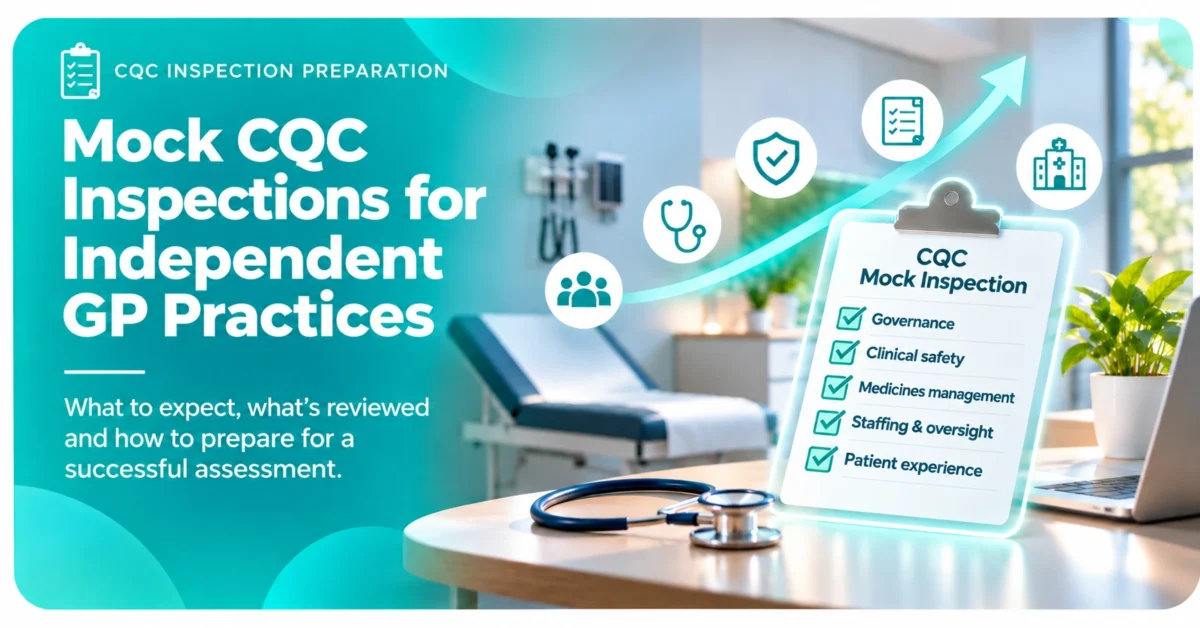
Mock CQC Inspections for Independent GP Practices: What to Expect and How to Prepare
For an independent GP provider, being ready for CQC scrutiny is about more than having policies, training records and an organised folder of documents. Leaders also need to know whether the way their service operates every day is safe, consistent and supported by reliable evidence. That can be difficult when a practice combines private consultations with travel health, screening, occupational …
CQC State of Care 2025/26: Key Findings for Care Providers
England’s care system is facing growing demand, more complex needs and difficult decisions about workforce, funding and service capacity. For care providers, the challenge is not simply knowing that the system is under pressure. It is understanding which risks they can address through better leadership, governance and everyday practice. The Care Quality Commission (CQC) published its State of Care 2025/26 …
CQC Training Compliance Checklist: What Care Providers Should Have in Place
Training compliance can look deceptively simple when the main dashboard shows a high percentage of courses completed. For CQC-regulated providers, however, the real question is broader: have you identified the learning your staff need, matched it to their roles and the people they support, checked that competence is maintained, and kept records that show leaders act when gaps appear? This …
How Training Records and Progress Can Support CQC Evidence
Training records can look complete without telling you very much about whether staff are ready for the work they actually do. A matrix may show that a course was completed, but it may not show why the learning was needed, whether it matched the person’s role, whether competence was checked, or what happened when a gap was identified. For CQC-regulated …
Staff Training and CQC: Why “Everyone’s Done Their Courses” Isn’t the Same as “Everyone’s Ready”
A training matrix full of green ticks can look reassuring. But does it prove your staff have the skills and competence to provide safe, effective care? Not necessarily. For care home and care service managers, one of the biggest risks is treating course completion as the end of the training process. Staff may have attended the required courses while refresher …
Staff Competency in Care: How to Assess and Evidence It Beyond Training Completion
Training records can show that a course was completed, but they do not automatically answer the question that matters most in practice: can the person perform their role safely, consistently and in line with the needs of the people they support? For CQC-regulated providers, that distinction is central to staff competency in care. This guide is for Registered Managers, Nominated …
Care Home Governance: What Good Oversight Looks Like in Practice
Good care home governance should be visible in the way a service is led every day. It is not just a set of audits, policies or meeting minutes. It is the system that helps leaders understand what is happening on the floor, identify risks early, use information intelligently and drive continuous improvement before concerns become embedded. The strongest oversight brings …
CQC Mock Inspection Case Study: How The Martlets Addressed Gaps Before Achieving Good Across All Five Key Questions
A mock CQC inspection is most useful when it does more than produce a rating. It should show a provider where evidence is weak, where practice is not fully reflected in records, and where practical action is needed before those gaps become regulatory concerns. The Martlets Care Home provides a useful real-world example of that process in action. In April …